Placer County Court, officially the Superior Court of Placer County, serves as the main trial court for all cases in Placer County, California. It handles civil disputes, criminal matters, family law issues, probate cases, and traffic infractions. Residents and attorneys rely on this court to resolve legal matters fairly and efficiently. With multiple divisions and trained staff, the court ensures cases are processed accurately, and public records remain accessible. This page provides a clear overview of the court’s services, divisions, and essential resources. Using this information, individuals can find the right department, complete filings, and manage legal responsibilities with confidence.
The court’s operations are organized into divisions for civil, criminal, family, probate, and traffic matters. Each division addresses specific legal issues, such as property disputes, divorces, felony charges, or estate settlements. In addition to in-person assistance, the court offers online tools for case searches, court calendars, and downloadable forms. These resources simplify interactions with the judicial system, supporting residents throughout the legal process. By presenting a concise court overview, this page helps users engage with the legal system effectively and access the judicial services they need.

How to Search Placer County Court Records
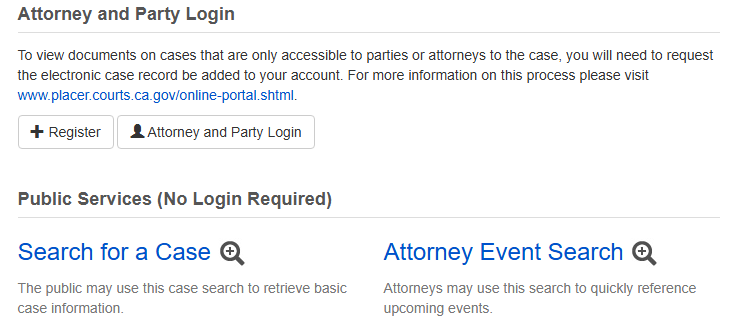
Residents can access Placer County Court case information quickly through an online case search. The court provides public access to records, enabling users to check case status, view hearing dates, or confirm filings. With the online portal, searching by case number or party name is straightforward and helps save time.
Steps for Searching
- Visit the Placer County Court Website – https://webportal.placerco.org/ecourtpublic start by going to the official court site and locate the “Online Case Search” or “Public Case Information” section.
- Login or Access the Portal – Some features may require creating a free account or signing in for advanced search options.
- Enter Case Details – You can search using a case number, party name, or other identifying information. For accuracy, enter names exactly as they appear in court records.
- Select the Case – From the search results, click the relevant case to view schedules, filings, or hearing information.
- Download or Print Records – Most public documents can be viewed online and printed for personal use.
What is Placer County Court?
The Placer County Court is the main trial court serving residents of Placer County, California. It handles civil, criminal, family, probate, and traffic cases, providing essential judicial services for the local community. This court overview explains the court’s role, its place within the California judicial system, and the ways it serves the public. As part of the California Superior Court system, the Placer County Court operates under the state’s judicial branch. It has jurisdiction over a wide range of legal matters, meaning it can hear cases involving disputes between individuals, violations of state law, family law issues, and matters related to estates and guardianships. By providing these services, the court ensures that legal processes are conducted fairly and efficiently, supporting the rule of law at the local level.
Role and Function of the Court
The Placer County Court also provides public access to legal records, online case searches, court calendars, and downloadable forms. These tools allow residents, attorneys, and researchers to stay informed and interact with the judicial system efficiently. By combining in-person services with digital resources, the court makes the California Superior Court system accessible to all members of the community.
Here it is:
- Civil Cases: Resolves disputes over contracts, property, personal injury, and other non-criminal matters.
- Criminal Cases: Handles felonies, misdemeanors, arraignments, trials, and sentencing.
- Family Law Cases: Oversees divorce, child custody, child support, and domestic violence matters.
- Probate & Estate Cases: Manages wills, estates, conservatorships, and guardianships.
- Traffic & Infractions: Processes tickets, fines, and driving-related offenses.
Court Divisions & What They Handle
Placer County Court organizes its services into distinct court divisions to handle various types of legal matters efficiently. Each division specializes in specific cases, ensuring that legal processes are managed by knowledgeable staff and judges. Residents can choose the correct division based on their case type, whether it involves civil disputes, criminal charges, family matters, juvenile issues, or traffic violations. Understanding these divisions helps individuals file cases correctly and track proceedings more effectively.
Civil Division
The civil division deals with disputes between individuals, businesses, or organizations. Common cases include contract disputes, personal injury claims, property disputes, and small claims matters. The division also oversees probate issues like estate administration and guardianships. Civil cases often involve monetary compensation or specific performance, and hearings can be scheduled for trials or motions. This division ensures disputes are resolved fairly and according to California law.
Criminal Division
The criminal division handles violations of state law, including misdemeanors and felonies. Cases may involve theft, assault, DUI, or drug-related offenses. The division manages arraignments, pretrial hearings, trials, and sentencing. Appeals for criminal cases are also processed through this division. Judges in the criminal division ensure defendants receive due process, while prosecutors and defense attorneys present evidence and arguments.
Family Division
The family division addresses cases involving domestic relations and child welfare. Examples include divorce, child custody, child support, spousal support, and restraining orders. This division may also handle adoption and domestic violence cases. Family court focuses on resolving sensitive matters with fairness, often using mediation or supervised hearings to protect all parties involved.
Juvenile Division
The juvenile division manages cases involving minors. These can include delinquency, dependency, and status offenses. The division prioritizes rehabilitation and guidance rather than punishment. Juvenile cases are generally confidential, and only authorized individuals can access records. Judges in this division work closely with social services and educational programs to support minors in complying with court orders.
Traffic Division
The traffic division oversees violations related to driving and road safety. Common cases include speeding tickets, DUI citations, parking violations, and other infractions. This division handles fines, hearings, and sometimes community service orders. Traffic court helps ensure compliance with California traffic laws while providing residents a structured way to resolve citations.
Court Services Provided
The Placer County Court offers a wide range of judicial services to ensure that legal matters are resolved efficiently and fairly. Residents can access services for civil disputes, criminal cases, family law issues, traffic violations, small claims, and more. This section outlines the primary services provided by the court and explains how individuals can engage with the legal system.
Criminal Court Services
This division ensures that criminal cases follow California laws while protecting the rights of all parties involved.The criminal division handles offenses ranging from misdemeanors to felonies.
Key services include:
- Case Filings: Filing complaints, arraignments, and charging documents.
- Hearings and Trials: Scheduled court appearances, pre-trial conferences, and jury trials.
- Sentencing and Probation: Imposing penalties and supervising probation cases.
- Appointments: Facilitating public defenders and legal counsel for eligible defendants.
Civil Court Services
The civil division resolves disputes between individuals, organizations, or businesses. Civil services aim to provide an organized process for resolving disputes efficiently while maintaining fairness.
Services include:
- Case Filings: Lawsuits involving contracts, property, personal injury, and debt disputes.
- Hearings: Motion hearings, trials, and settlement conferences.
- Mediation Programs: Court-supervised mediation to help parties reach agreements outside of trial.
- Records Access: Public access to filings and court decisions.
Family Court Services
Family law matters are handled through dedicated judicial services for domestic relations. Family court focuses on resolving sensitive matters while prioritizing the welfare of children and families.
Services include:
- Divorce and Separation: Filing petitions and managing dissolution proceedings.
- Child Custody & Support: Scheduling hearings and managing enforcement actions.
- Domestic Violence & Restraining Orders: Protective orders and related hearings.
- Mediation Programs: Assistance in resolving custody and support disputes amicably.
Traffic and Small Claims Services
These divisions allow residents to resolve minor legal issues efficiently while maintaining public access to the judicial system. The court also provides judicial services for traffic violations and small claims cases.
Here it is:
- Traffic Services: Processing citations, fines, infraction hearings, and payment plans.
- Small Claims: Handling disputes under state limits, including property damage and contract issues.
- Appointments: Scheduling hearings and trials for both traffic and small claims cases.
Public Access and Support Services
By offering these judicial services, the Placer County Court ensures that residents, attorneys, and organizations can manage their legal matters confidently and efficiently.
The court provides additional support through:
- Records Access: Viewing and obtaining copies of public case records.
- Case Filings Online: Submitting forms electronically for civil, family, or probate matters.
- Court Calendars: Checking upcoming hearings, trials, and appointments.
Jury Duty, Public Access & Legal Resources
Jury duty is a vital part of the Placer County Court system, ensuring that residents participate in the judicial process and help uphold justice. Citizens called for jury service receive clear instructions on their responsibilities, eligibility, and schedules, making the process straightforward and organized. The court provides extensive public access to legal resources, allowing individuals to obtain information about ongoing cases, court calendars, and filing procedures. Whether a resident needs to review case documents, check hearing dates, or understand court procedures, the Placer County Court ensures these resources are available both in-person and online.
Jury Duty Information
- Juror Eligibility: Must be a U.S. citizen, at least 18 years old, a resident of Placer County, and able to understand English.
- Summons & Reporting: Citizens receive a jury summons with instructions for appearance, including the service schedule and required documentation.
- Service Schedule: Jury service can vary from one day to several weeks, depending on the type of trial assigned.
- Exemptions & Deferrals: Certain individuals may request deferral or exemption due to hardship, age, or other qualifying reasons.
Public Access to Court Services
The court prioritizes transparency and convenience for the public:
- Case Information: Residents can search for civil, criminal, family, and probate case details.
- Court Calendars: View upcoming hearings, trials, and court events.
- Forms & Filings: Download legal forms needed for various case types.
- Self-Help Resources: Guidance for those representing themselves in family law or civil cases.
Additional Legal Resources
Placer County Court also provides educational materials and guidance to help the public understand the judicial process. Online portals, informational brochures, and courthouse assistance desks ensure that legal procedures are accessible. By combining jury participation, public access to records, and educational resources, the court fosters an informed community engaged with the judicial branch.
Court Calendar & Docket Information
The Placer County Court calendar and docket provide users with clear information about upcoming hearings, trials, and other court events. By accessing the court calendar online, individuals can track case schedules, review trial dates, and plan their attendance efficiently. The court docket includes detailed information about cases, helping both legal professionals and the public stay informed and prepared for scheduled proceedings.
Accessing the Court Calendar
The court calendar provides a schedule of upcoming hearings, trials, and other official court events for Placer County Court. Users can access the court docket to see detailed information about cases, including dates, times, and the assigned courtrooms. This ensures transparency and helps individuals stay informed about legal proceedings that may involve them or require their attendance.
Searching for Hearing Dates
Visitors can search the court calendar by case number, party name, or filing date. This search capability allows users to quickly locate hearing dates and trial schedules relevant to their cases. The court docket displays case types, parties involved, and the current status of each matter. By checking these records, users can confirm scheduled events and plan accordingly, whether attending in person or monitoring updates online.
Understanding Trial Calendars
Trial calendars are updated regularly to reflect any changes in hearing dates or courtroom assignments. Users are encouraged to review the court docket frequently, as schedules may be adjusted due to procedural requirements or unexpected circumstances. This ensures that all parties have the most accurate information about upcoming proceedings and avoids missed appearances.
General Sessions and Special Hearings
The court calendar also lists general sessions, special hearings, and other events organized by the Placer County Court. Each entry includes key details, such as the judge assigned, case type, and relevant filing information. This structured presentation helps users track multiple cases efficiently and ensures clarity for both legal professionals and the public.
Notifications and Updates
In addition to viewing the calendar online, users can access notifications for specific cases or hearing dates. These notifications can provide reminders of upcoming trial dates and alert parties to any rescheduled events. Maintaining awareness of court schedules through the docket ensures compliance with court requirements and helps manage case-related responsibilities effectively.
Importance of Court Calendar & Docket Information
Overall, the court calendar and docket information serve as essential tools for staying informed about Placer County Court activities. By providing clear access to hearing dates, trial calendars, and case schedules, the court supports transparency and allows users to manage their legal obligations with confidence. Accessing this information online simplifies planning, reduces the risk of missed hearings, and ensures that users can efficiently follow the progress of ongoing cases.
Placer County Court Locations & Hours
The Placer County Court operates multiple courthouses to serve residents across the county. Each location provides access to court services, public records, and administrative offices, ensuring convenient public access to the judicial system. Visitors can find information on addresses, hours, parking, and office services at each facility.
Main Courthouse – Auburn
- Address: 10820 Justice Center Drive, Auburn, CA 95603
- Office Hours: Monday–Friday, 8:30 a.m. – 4:30 p.m.
- Services: Civil, criminal, family law, probate, and traffic cases
- Parking & Access: Public parking available; accessible entrances for individuals with disabilities
- Contact: (530) 889-7900
General Public Access Information
- Courthouse lobbies provide directories, information desks, and public terminals for case searches.
- Visitors can obtain forms for civil, family, criminal, or probate matters.
- Court offices maintain courthouse maps to guide residents to specific divisions or departments.
Filing Procedures & Court Fees
The Placer County Court provides clear guidance on court filing procedures and court fees, helping residents, attorneys, and organizations submit legal documents efficiently. Correctly filing paperwork and paying required fees ensures that cases are processed without delay and aligns with the rules of the judicial system.
Steps for Filing Paperwork
- Prepare the Required Forms – Identify forms needed for your case type, such as civil, family, probate, or traffic. Forms are available online or at the courthouse clerk’s office.
- Complete Forms Accurately – Fill out all required fields, including signatures, dates, and supporting documentation. Incomplete forms may be rejected.
- Submit Your Documents – File forms in person at the courthouse or through the court’s online filing system where available. Keep copies for your records.
- Obtain a Case Number – Once filed, the clerk assigns a case number, which is essential for tracking case status and attending hearings.
- Follow Court Instructions – Pay attention to notices regarding additional filings, hearings, or required documentation.
Court Fees & Payment
The Placer County Court charges fees based on case type, with options for payment in person or online. Individuals experiencing financial hardship may request a fee waiver.
| Case Type / Service | Typical Filing Fee | Payment Options | Notes |
|---|---|---|---|
| Civil Complaint / Lawsuit | $435 | Cash, Check, Money Order, Credit/Debit | May vary by case type; additional fees for motions/trials |
| Small Claims Filing | $75–$100 | Cash, Check, Money Order | Fee depends on claim amount; online filing may be available |
| Family Law Petition / Divorce | $435 | Cash, Check, Money Order, Credit/Debit | Fee waiver possible for financial hardship |
| Child Support / Custody Filing | $60 | Cash, Check, Money Order | Additional fees may apply for summons or service |
| Probate / Estate Filing | $435–$450 | Cash, Check, Money Order, Credit/Debit | Fee depends on estate value and filing type |
| Traffic Infraction / Citation | $35–$150 | Cash, Check, Money Order, Online Payment | Fees vary by violation; late fees may apply |
| Fee Waiver Application | $0 | N/A | Must submit supporting financial documents; subject to approval |
Contact & Communication
Residents and legal professionals can reach the Placer County Court through multiple channels to obtain information, submit inquiries, or schedule appointments. Clear court contact options ensure that the public can communicate efficiently with the appropriate departments.
Contact Methods
- Phone Numbers: Each courthouse and division maintains direct lines for civil, criminal, family, probate, and traffic matters. For general inquiries, the main line is (530) 889-7900.
- Email & Online Forms: Many questions can be submitted via email or through the court’s online contact form. This method allows for quick responses without visiting in person.
- Directory Assistance: The court website provides a comprehensive directory of departments, judges, and clerk offices, making it easy to identify the correct contact for your needs.
- In-Person Visits: Courthouses are open during regular business hours, and staff at the front desk can guide visitors to the proper office or provide forms and information.
Frequently Asked Questions
This section addresses common questions about the Placer County Court, offering clear, detailed, and actionable information. These informational FAQs help residents, attorneys, and researchers understand procedures, deadlines, fees, and resources available at the court.
How do I pay court fees?
The Placer County Court accepts multiple payment methods, including cash, check, money order, and, in some cases, credit or debit cards. Many divisions also allow online payments for civil and traffic cases. Fees vary based on the case type and filing, such as civil complaints, family law petitions, probate matters, or traffic citations. Individuals who face financial hardship may apply for a fee waiver, which requires completing a request form and providing documentation of income and expenses. The clerk’s office can advise which fee waiver forms are needed.
Can I represent myself in court?
Yes, individuals may represent themselves, a process called “pro se” representation. The court provides self-help resources, downloadable forms, and instructions for filing and attending hearings. While representing oneself is allowed, complex cases such as contested divorce, probate, or major civil disputes may benefit from consulting an attorney. Court clerks can answer procedural questions but cannot provide legal advice.
What should I do if I am called for jury duty?
Jury service is an important civic responsibility. If summoned, carefully read your jury summons for instructions on reporting, entrance requirements, and the service schedule. Bring any required documentation and arrive on time. Individuals who may need a deferral or exemption, due to age, health, or other hardships, must submit requests according to the instructions provided. The court offers juror orientation and guidance to make participation clear and organized.
How do I obtain copies of court documents?
Copies of case documents can be requested in person at the clerk’s office or through online portals where available. Fees may apply depending on the number of pages and the type of case. Requests should include the case number, party names, and specific documents needed. Copies are often used for legal proceedings, personal records, or research purposes.
How do I contact the court for general inquiries?
Contact can be made by phone, email, or through the court’s online directory. The directory lists phone numbers, email addresses, and extensions for specific departments, such as civil, criminal, family, probate, and traffic divisions. When contacting the court, include your case number and relevant details to receive a faster response. For non-urgent questions, email is preferred, while urgent matters are better addressed by phone.