Placer County Court Records are official documents created during legal proceedings in the county’s courts. These records include case filings, motions, orders, and judgments that form a formal account of each legal matter. Court records Placer County provide transparency in the judicial process and are used by attorneys, researchers, and members of the public to verify legal information. They cover civil, criminal, probate, and family court cases, documenting each step from filing to resolution. Public court documents are maintained according to the California Rules of Court, ensuring accuracy and consistency. They serve as a reliable source for case histories, timelines, and official rulings. Each record contributes to the overall clarity and accountability of Placer County’s legal system.
Access to public court documents allows individuals and professionals to examine legal proceedings while following privacy restrictions for sensitive cases. Complaints, petitions, motions, responses, judgments, and docket entries are all part of the official filings that make up Placer Legal Records in Placer County. These records help attorneys prepare cases, journalists report accurately, and citizens stay informed about judicial activity. While most documents are public, family court or minor-related cases may require special requests for access. By organizing and preserving these records, Placer County maintains transparency, supports legal research, and ensures that every legal action is documented. The court clerk manages requests and ensures records comply with legal standards, keeping the judicial process verifiable and structured.
How to Search Placer County Court Records
Accessing court records in Placer County is essential for legal professionals, researchers, and members of the public seeking accurate case information. Court records include filings, motions, judgments, and docket entries for civil, criminal, probate, and family cases. Knowing how to search these records can save time and ensure reliable results. The county offers both online tools and in-person access at the courthouse. While unofficial sites exist, the official portal provides the most accurate and up-to-date information for any case lookup.
Online Search
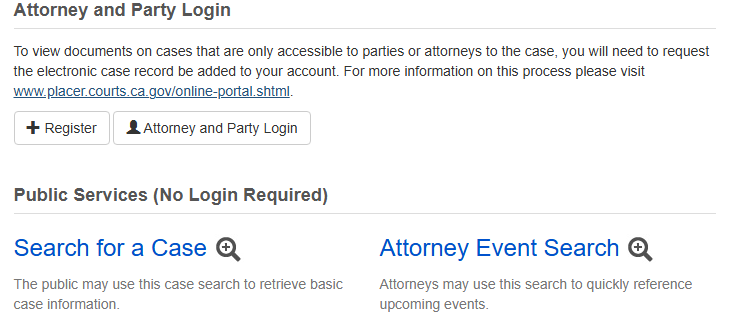
The easiest way to access court records is through the court’s official online portal. The portal provides tools for both case number searches and party name lookups, allowing users to quickly locate the specific case information they need. Before using the search, gather any identifying details like the case number, full names of parties, or filing dates to streamline the process. Use the official portal here: https://webportal.placerco.org/ecourtpublic to access official public records.
Here’s how to search online:
- Choose the Case Search option on the portal page.
- Enter either a case number (most efficient) or a party name (last name works best).
- Adjust date ranges if needed to narrow results.
- Review basic case info like case type, filing date, and status.
- For more details, check the register of actions (a chronological list of all events in a case).
In‑Person Search
For records not fully available online, visiting the courthouse can provide additional access. Public access terminals in the clerk’s office allow you to view docket sheets and case documents directly. Before you go, gather relevant case numbers or party names to make your search faster.
At the courthouse, you can:
- Visit the Hon. Howard G. Gibson Courthouse, 10820 Justice Center Drive, Roseville, CA 95678.
- Check hours, usually Monday through Friday, 8:00 a.m. to 4:00 p.m., excluding court holidays.
- Use public access terminals near the clerk counter for free case searches.
- Bring identifying info like case numbers or full party names to locate records efficiently.
- Ask staff for help with special requests or archived documents, which may take additional time or fees.
Types of Court Records in Placer County
Placer County maintains a wide range of court records, each corresponding to different areas of the judicial system. These records provide an official account of cases and proceedings, ensuring transparency under the California Public Records Act. They are used by attorneys, researchers, and the public to track legal activity. Records reflect judge rulings, motions, orders, and outcomes across civil, criminal, family, probate, and smaller cases.
Civil Court Records
Civil court records document lawsuits and disputes between individuals, businesses, or organizations. They capture every stage of the legal process, from filing to resolution. These records help parties track official actions and verify outcomes. Reviewing civil records provides insight into judge rulings, motions, and decisions in disputes.
Key elements in civil case documents include:
- Complaints and petitions filed by the plaintiff
- Motions and responses submitted during the case
- Judge rulings and court orders
- Final judgments resolving the dispute
Criminal Court Records
Criminal court records include felonies and misdemeanors filed in Placer County. They provide a complete account of the judicial process, including arrests, trials, and sentencing. Criminal case files allow attorneys, law enforcement, and the public to follow the course of legal proceedings. These records ensure transparency and accountability in criminal cases.
Key components of criminal case files include:
- Arrest information and charges
- Plea documents submitted by defendants
- Trial records and motions filed by attorneys
- Sentencing orders and judgments issued by the judge
Family Law Records
Family law records cover marriage, divorce, child custody, adoption, and domestic partnerships. They document court decisions that affect family relationships and legal responsibilities. These records provide a detailed account of petitions, motions, and orders issued by judges. They are essential for tracking outcomes in sensitive family matters.
Typical documents found in family law records include:
- Petitions and motions regarding family disputes
- Court orders on custody, visitation, and support
- Final judgments resolving divorce or family disputes
- Guardianship records for minors or dependents
Probate Court Records
Probate court records deal with wills, estates, and guardianships. They track the legal management of estates, appointment of executors, and protection of beneficiaries. These records include petitions, accounting statements, and court orders. Probate records ensure compliance with California law and provide transparency in estate administration.
Main documents in probate court records include:
- Petitions to probate a will
- Appointment of executors or guardians
- Accounting statements and motions filed by interested parties
- Final orders for estate distribution
Traffic & Small Claims Records
Traffic and small claims records cover minor offenses, parking violations, or disputes over small sums of money. These cases generate official documentation of filings, motions, and court decisions. Even minor records are important for legal accountability. Reviewing them provides a full picture of judicial activity in the county.
Common documents in these cases include:
- Citations and filings for traffic violations
- Petitions and responses for small claims cases
- Court orders and judgments resolving disputes
By maintaining these diverse court records, Placer County ensures transparency, accountability, and compliance with the California Public Records Act. Individuals can review filings, motions, orders, and judge rulings to confirm case histories and legal outcomes across all areas of the judicial system.
Are Placer County Court Records Public?
Yes, many public records in Placer County are accessible to the general public. Court records provide transparency in the legal process and allow individuals to verify filings, motions, and judge rulings. These records cover civil, criminal, family, probate, traffic, and small claims cases. Accessing these records helps attorneys, journalists, researchers, and residents follow the judicial system while ensuring accountability.
Public Access Rights
Most court records are considered public under California law. This means anyone can review filings, court orders, and case histories, either online or in person. Public access allows citizens to confirm legal outcomes and follow proceedings while supporting transparency in the judicial system.
Ways to access records include:
- Using the official Placer County court portal for online case searches
- Visiting the courthouse to view records at public terminals
- Requesting copies of filings, motions, or judgments
- Checking case registers for updates on ongoing proceedings
Confidential or Sealed Records
Not all records are open to the public. Certain cases or documents are sealed or confidential to protect sensitive information. Family law cases involving minors, adoption proceedings, or restraining orders often have restricted access. Some criminal case files may also be partially sealed to safeguard victims, witnesses, or ongoing investigations.
Redaction Rules and Privacy Protections
Even when records are public, courts follow strict redaction rules to protect personal privacy. Sensitive information such as Social Security numbers, financial data, or home addresses may be removed from documents before release. These privacy protections ensure that transparency does not compromise the safety or rights of individuals involved.
Key points about privacy protections include:
- Redacted copies are provided for public access when necessary
- Sealed records require a court order for review
- Sensitive cases are handled in compliance with California privacy laws
- Public access focuses on legal actions while limiting exposure of personal details
By balancing public access with privacy protections, Placer County ensures transparency in its judicial system while protecting sensitive information. Individuals seeking court records should always follow official procedures and respect any restrictions placed on confidential or sealed files.
Specific Records Explained
Placer County maintains a variety of specific court records that document personal, legal, and financial matters. These records serve as official documentation for family, probate, and civil cases. Understanding what each type includes and how to access them helps individuals, attorneys, and researchers obtain accurate information. This section covers marriage and divorce records as well as probate records, explaining what is available and how to request certified copies.
Marriage & Divorce Records
Marriage and divorce records in Placer County provide official documentation of marital status, legal dissolutions, and court judgments. These records are essential for legal verification, genealogical research, or personal documentation. They include both the original filings and finalized judgments issued by the court.
What’s Included in Marriage & Divorce Records
Marriage and divorce records typically include:
- Marriage certificates with names, dates, and officiant details
- Divorce decrees outlining terms of dissolution, custody, and support
- Judgments or court orders related to property division or spousal support
- Amendments or name change documentation related to marital status
Where Records Are Held
Marriage certificates are maintained at the Placer County Clerk-Recorder’s Office, while divorce filings and judgments are kept by the Placer County Superior Court older or archived records may require special access. Court staff can guide individuals in locating historical documents efficiently.
How to Request Certified Copies
Certified copies can be requested in person, by mail, or online. Individuals should provide the full names of the parties, the date of marriage or divorce, and the case number if available. Applicable fees must be paid, and certified copies are often required for legal, financial, or personal purposes.
Probate Records
Probate records in Placer County document the legal management of estates, conservatorships, and trusts. These records provide a detailed account of petitions, filings, and court orders that govern estate distribution or guardianships. They ensure transparency and protect the rights of beneficiaries.
What’s Included in Probate Records
Key probate records include:
- Estate filings such as petitions to probate a will or administer an estate
- Conservatorship documents appointing guardians for minors or adults with disabilities
- Trust documents filed with the court for review or approval
- Court orders, judgments, and accounting statements related to estates and trusts
Where Records Are Held
Probate records are maintained by the Placer County Superior Court Probate Division. Access is available through public terminals at the courthouse or via the official court portal. Court staff can assist with locating specific case files.
How to Request Certified Copies
Requests for certified probate copies require the case number and names of the parties involved. Requests can be submitted in person, by mail, or online, and applicable fees must be paid. Certified copies are typically needed for legal, financial, or personal matters.
Retention & Availability of Court Records
Placer County follows specific rules for how long court records are retained and how they are made available to the public. Proper retention ensures transparency while complying with legal obligations. The county maintains both digital and physical copies according to state and local archival standards. Understanding retention timelines, archival procedures, and access methods helps attorneys, researchers, and the public work with court records efficiently.
How Long Records Are Kept
Court records in Placer County are retained based on the type of case and legal requirements. Some records remain accessible indefinitely, while others are maintained for a limited period before being archived or destroyed. Retention schedules balance the need for transparency with storage limitations and privacy considerations.
Key points about retention include:
- Civil and criminal case files may be retained for 10–20 years depending on the case type
- Family law records involving minors or sensitive information may be retained longer
- Traffic and small claims records generally have shorter retention periods
- Court staff follow a destruction schedule regulated under California law for outdated or non-essential files
Archival Standards
Placer County adheres to strict archival standards to preserve the integrity and authenticity of court documents. Archival procedures ensure that historical records remain accurate and usable for research, legal reference, or official verification. Proper archiving also protects sensitive information and ensures compliance with state regulations.
Important archival practices include:
- Organizing files systematically for easy retrieval
- Maintaining digital and physical records according to preservation guidelines
- Protecting sensitive information through restricted access for confidential cases
- Documenting transfers of older files to county archives for long-term storage
Digital vs. Physical Copies
Court records are available in both digital and physical formats. Digital copies allow remote access and reduce the need for physical storage, while paper records serve as official originals and backups. Both formats are maintained according to archival standards to ensure document preservation over time.
Key aspects include:
- Digital records can be accessed through the official court portal or public terminals
- Physical copies remain in courthouse storage or archival facilities
- Regular backups and security protocols ensure data integrity and prevent loss
- Certain older or historical records may only be available in physical format
By following record retention policies, Placer County ensures that official court files are preserved, accessible, and compliant with California law. Proper retention and archival practices maintain the integrity of judicial records while providing transparency for public and legal purposes.
Fees & Requesting Official Copies
Placer County provides official court documents for individuals who need document copies for legal, personal, or professional purposes. These records include civil, criminal, family, probate, traffic, and small claims case files. Understanding the fee structure, differences between certified and informational copies, and available payment methods helps residents and attorneys request records efficiently.
Standard Fees for Copies
Placer County charges fees for reproducing court records. Fees help cover administrative costs, printing, and staff time while ensuring that records remain accessible. Costs vary depending on the type of copy and whether it is certified or informational.
Typical fee structure includes:
| Category | Details | Fees / Notes |
|---|---|---|
| Standard Informational Copies | Copies of court documents for reference; no official seal | $0.50–$1 per page, depending on document type |
| Certified Copies | Legally recognized copies with court seal and signature; valid for official use | $15–$20 per document; includes certification |
| Archived / Older Records | Special handling for historical or archived files | Additional fees may apply |
| Copy Request Forms | Required for both certified and informational copies; include case info | Must provide full names, case number, document type |
| Payment Options | Cash, check, money order, or credit card (online or in person) | Ensure payment accompanies request to avoid delays |
| Submission Methods | In person, by mail, or via official court portal | Online portal: Placer County Superior Court Portal |
| Usage Notes | Certified copies are valid for legal/official purposes; informational copies for personal reference only | Certification ensures authenticity; informational copies cannot be submitted in court |
Certified vs. Informational Copies
There are two main types of copies available: certified and informational. Certified copies carry the official seal of the court, making them legally valid for official purposes. Informational copies are for reference only and cannot be submitted as proof in legal proceedings.
Differences include:
- Certified court documents: include a court seal and signature; legally recognized for use in courts, agencies, or legal matters
- Informational copies: provide the same content as the original document but without certification; used for personal reference or research
Payment Options & Forms
Placer County allows multiple payment options for record retrieval. This makes it convenient to request certified or informational copies in person, by mail, or online. Proper completion of forms ensures that records are correctly processed and delivered.
Key details include:
- Acceptable payment methods: cash, check, money order, or credit card (online or in person)
- Copy request forms are required for both certified and informational copies
- Requests can be submitted in person, by mail, or through the official court portal
- Include full names, case numbers, and the type of document requested to avoid delays
By following the fee schedule, completing request forms accurately, and choosing the correct type of copy, individuals can efficiently obtain certified court documents or informational copies from Placer County. These processes ensure that record retrieval is secure, transparent, and compliant with county regulations.
Courthouse Contact & Assistance
Placer County residents and legal professionals often need direct contact with the courthouse for records, filings, or assistance. The county provides multiple courthouses and offices where individuals can access Superior Court records, request certified copies, or use public access terminals. Clear contact information ensures that anyone needing help with court documents or procedures can reach the right office efficiently.
Main Courthouse Locations
Placer County operates multiple courthouse facilities depending on case type. Knowing the address and operating hours is essential for in-person visits or record requests.
Key locations include:
- Auburn Courthouse – 10820 Justice Center Drive, Auburn, CA 95603
- Roseville Courthouse – 3141 Professional Drive, Roseville, CA 95661
- Public access terminals are available at both courthouses for on-site record searches
Clerk’s Office Contact Information
The Clerk’s Office serves as the official record custodian for court documents and filings. Staff can assist with locating files, requesting certified copies, and providing guidance on accessing records in person or online.
Contact details:
- Phone: (530) 889-4044
- Email: clerk@placer.courts.ca.gov
- Hours: Monday–Friday, 8:30 AM – 4:30 PM
- Public access terminals are available for on-site searches of court records
Online Resources
Placer County also provides online tools for easier access to court records. These resources allow users to search for cases, request copies, and review filings without visiting the courthouse.
Online access includes:
- Official Placer County Superior Court Portal: https://www.placer.courts.ca.gov
- Case lookup tools for civil, criminal, probate, and family law records
- Instructions for submitting record requests electronically
By providing clear contact information and online resources, Placer County ensures that access to Superior Court records is efficient, secure, and convenient. Whether in-person or online, residents can locate filings, request certified copies, or review case details with support from courthouse staff.
Frequantly Asked Questions
Many residents and legal professionals have questions about accessing Placer County court records, including how to search, what is available, and how to request official copies. This FAQ provides clear, detailed answers that make it easy to understand record access, certified copies, and public access rights. Each answer is structured to be rich snippet-friendly, helping users find quick and reliable information.
How do I look up my court case online?
To search for a court case online, individuals should use the official Placer County Superior Court portal. Searches can be performed using a case number or the names of the parties involved. The portal displays the register of actions, filing history, and scheduled hearings. For the most accurate results, it is recommended to enter names with exact spelling or use the case number when available. Public access terminals at the courthouse can assist if online records are incomplete or for cases not yet digitized. This method allows users to track cases in real-time and verify official filings without visiting the courthouse in person.
Can I get divorce records for free?
Divorce records in Placer County are generally not available for free. While basic case information might be viewed online or at the courthouse for reference, certified copies require payment to cover processing and verification. Informational copies may be reviewed without certification, but certified copies carry the official court seal and signature, making them valid for legal, financial, or administrative purposes. Understanding this distinction ensures that users request the proper type of document for their intended use.
Which records are not public?
Certain court records are sealed or confidential to protect privacy, sensitive matters, or minors. These records cannot be accessed by the general public. Examples include juvenile court files, adoption records, and some family law matters such as restraining orders or confidential custody cases. Access to sealed records requires authorization from the court or a legal representative, and unauthorized attempts to obtain these records may be denied. This approach balances public transparency with personal privacy and legal protections.
How long does the court keep records?
Placer County follows record retention schedules mandated by California law. Different types of cases have varying retention periods, with civil, criminal, and probate records typically retained between five and twenty years. Traffic and small claims records generally have shorter retention timelines. Older records may be archived for historical purposes or destroyed once retention requirements are met. Records are maintained in both digital and physical formats, ensuring preservation and accessibility over time.
Where do I request certified copies?
Certified copies of court documents are available through the Clerk’s Office at the courthouse or via the official court portal. Requests require the full names of the parties, case number if available, and the specific type of document. Certified copies include the official court seal and signature, making them legally recognized for official or administrative purposes. Informational copies are also available for personal reference but cannot be submitted as legal evidence. Requests can be submitted in person, by mail, or online through the official portal, and payment of applicable fees is required for certified documents.